
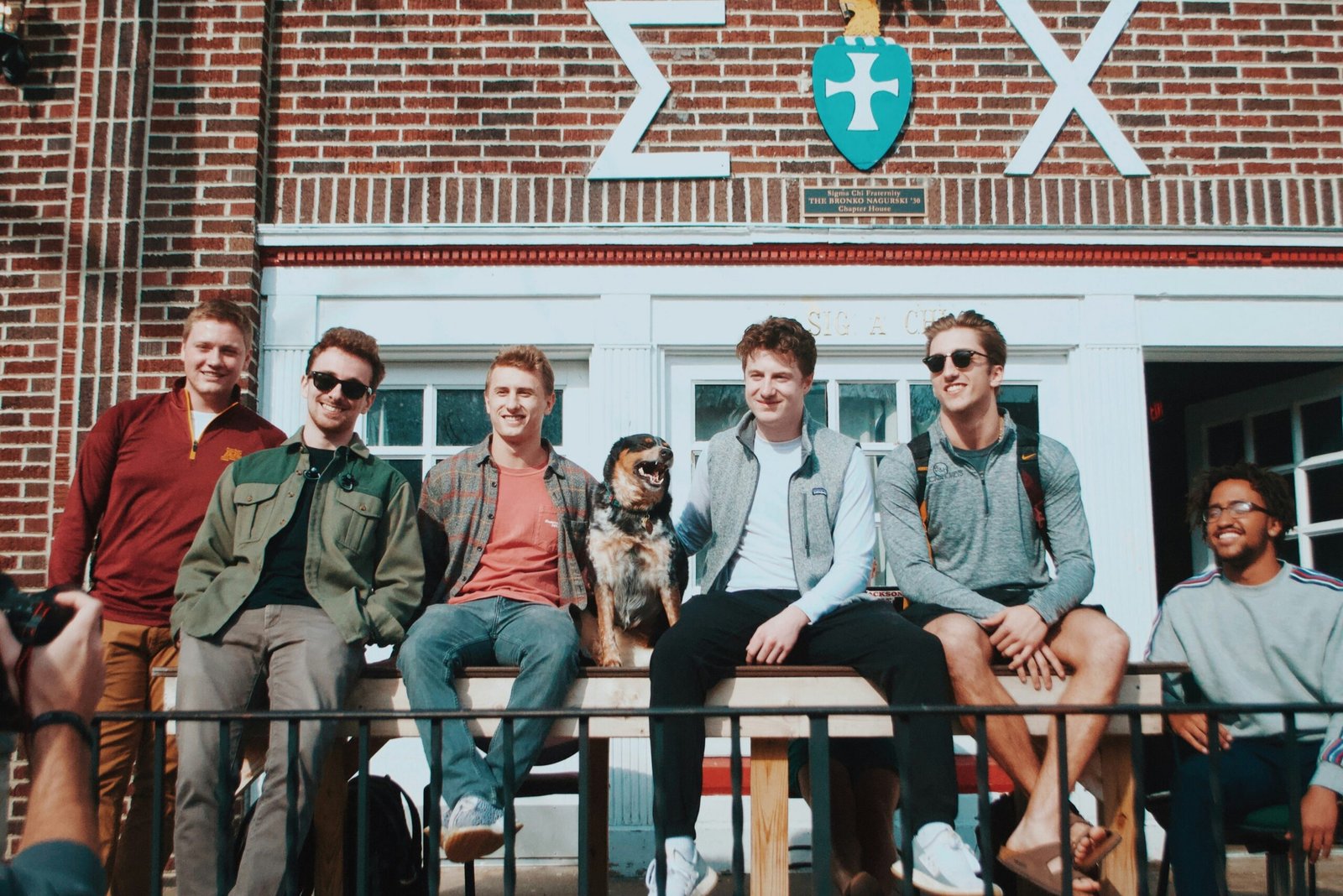
Photo by Joel Mott on Unsplash
Who are they?
Born between 1981 and 1996, with 72 million individuals in the United states, Generation Y, or Millennials, is likely the most studied generation. A myriad of investigations have attempted to describe this generation from multiple perspectives. Tech savvy. Creative. Open-minded. Entrepreneurial. Those are just some of a variety of words that have been used to describe Millennials. Following the Millennial generation is the iGeneration, or Generation Z (Gen. Z ), consisting of individuals born between 1997 and 2012 (or so). These two generations share many similarities, such as their open-mindedness, creativity, and intelligence. Yet, Gen. Z’s are quite unique as well.
Millennials are tech savvy, Gen. Z’s are tech natives. Born in the era of smart devices, Gen. Z’s are used to using multiple devices. They are used to using images and videos to communicate, through the introductions of Instagram, Snapchat, and TikTok. They are fluent at multitasking. According to Sparks & Honey, a New York ad agency, Gen. Z’s switch between 5 screens: a smartphone, TV, laptop, desktop, and iPod. Nearly half of Gen. Z are connected online for over 10 hours per day. This generation learned from Millennials and is more concerned about their privacy. Indeed, a study done by Pew Research Center said that 57% of Gen. Z have not posted something due to privacy concerns.
In line with the concern for online security, Gen. Z is concerned about finance security. Witnessing their parents or older siblings going through the Great Recession in 2018, Gen. Z’s are quite realistic. According to Forbes, “while millennials are often seen as more idealistic, and more motivated by purpose than a paycheck, Generation Z may lead more towards security and money. This is a pragmatic generation – they care about making a difference that are ultimately motivated by ensuring they have a secure life outside of work.”
Besides those qualities, there are many more ways to define Gen. Z’s. Instead of providing a list of those characteristics, let’s find out more through our conversations with Peter Darrow and Emily Perlow.
A Conversation with Peter Darrow
To the Eta Tau chapter, many know Peter N. Darrow as a fellow Beta brother from the University of Miami through his role as a Recruitment Specialist and a Director on the Beta Theta Pi Foundation board. Peter is also a native New Yorker, an entrepreneur, and a Millennial who has learned a great deal from his mistakes. After earning an MBA in entrepreneurship from Babson College in 2014, he founded he founded Darrow’s Farm Fresh restaurant in Union Square in NYC. Through his book, Wise Millennial, and his same-titled podcast, Peter discovers and challenges the millennial culture in the building of modern communities.
JD: Hi Peter! Thank you so much for joining me today. To get straight to the point, from your experience as a Millennial and your exposure to the millennial culture, and seeing that Gen. Z is entering college and the workforce, what do you think are the most significant differences between these two generations?
PD: Thank you, John. And to answer your questions, I think there are a couple of things. One, the fact that all of Gen. Z’s online, you know. It’s a given, it’s not an option. And a lot of Gen. Z want to be insta-famous, want to be an influencer, and it’s really important to people. And millennials kind of started that trend. Although I think the biggest difference is that millennials all try to one up each other and try to compare to each other. And Gen. Z does that too. To Gen. Z’s credit, they’re not that harsh on each other, people are just looking to be entertained, in a more fun and silly way, while Millennials tend to be a little bit more bashful towards each other and themselves. I would also say that Millennials certainly don’t want to be compared to others. They want to be part of a community and a group but without labels, which is often oxymoronic. It’s like “I want to be part of the group, but I don’t want to be labeled as part of any group.” People are very sensitive to being labeled. But Gen. Z, I have to spend more time with that generation. I think that many of them are still forming their identity in many ways.
JD: Indeed, many Gen. Z’s are entering college. And fraternity can be a part of their college experience. So looking at the way that fraternities, Beta included, are operating, do you think the differences between the generations affect one’s decision to join Greek life?
PD: As you know, I have the honor and privilege to serve on the Beta Theta Pi Foundation board. And I certainly hope that we’re attracting quality men. We certainly try to promote our core values. And more broadly to your point, I think the question is “Is fraternity life preparing people for the next stages of life?” or “Are the lessons you learned by being in a fraternity accurately, properly, preparing you for what comes after?” And I think so. We invest so much energy and financial resources into leadership programming. It certainly made an impact on my life. Could we do more? Sure. But the purpose of a fraternity on a high level is not to help you to interview better for applications. It’s not an HR component. It’s to give you the social skills to be socialized in the world, to be a leader in a group, to understand how to take actions. It gives you the social skills which are critical to succeeding in life, not just professionally. I do believe that Beta does give you an opportunity to really understand group dynamics. Fraternities in general, not just Beta. I’m a big believer in Greek life. You know, it allows you to understand that often, you’re not going to get your way. But you go with what’s best for the group, whether you agree with it or not. And that kind of compromise, I think, is really important for any relationship, whether it be professional, personal, or romantic. Life is all about compromise. Could we be doing better? Sure, of course we want to help people! A lot of people joined fraternities for connections and networking. They think it’s like an “old boys club”, and by joining a fraternity, they can get to know the alumni and get a job. And there’s nothing wrong with thinking that. By the way, Beta does have a great alumni network and you can utilize it. But that’s not our main focus. We’re not a job platform, respectfully. You do have access to that, and certainly, that’s a nice perk and bonus. But you have to take initiatives on that. The main priority of a fraternity is leadership programming. We believe that the skills necessary in life are about how to be a better human, how to be a leader, how to be a better husband, a better father, a better friend. And that is going to take you a lot further in life than just some simple job.
JD: And to shift gears for just a little bit, in your book, Wise Millennial, you mentioned a story when you wrote a letter about the late Reverend Anthony Campbell in high school. One of the challenges that you faced was that you were at a boarding school with more than 150 years of school tradition, and at such a young age, you were, for lack of a better word, not confident or brave enough to stand up for yourself against your advisor. Similarly, Beta is an organization with a rich history. Do you think that new members will face any challenges adapting to, adjusting to, or speaking up for themselves with such a historic institution?
PD: I appreciate you reading the book, certainly that part of it. That was a very touching piece. You know, I hope not. I’ll let you be the judge of that. Were you intimidated when you draw on Beta? Did you feel like you weren’t able to fully vocalize your thoughts or feelings?
JD: I would not say I was intimidated. When I first joined, the feeling was along the line of not knowing anything at all, because there is a way of doing things that the fraternity and the chapter have been used to. And as someone who just joined the fraternity and college, and was trying to learn the ropes, I would say it felt scary. I didn’t want to make bad first impressions, even though I was already inducted into the organization. I still had to learn about the people and the ways they do things. It was scary at first. But it was a learning curve.
PD: Yeah, totally. We always want our members to speak up. We want people to take ownership of the experience. Respectfully, I can’t control whether someone feels intimidated or not. Of course we don’t want it to be intimidating. That’s not our goal. We want it to feel approachable. But it really depends. I was a founding father of my chapter at U Miami. There is a history of Beta, but our local chapter was brand new, there was no history. We got to make it what we wanted. It really depends on how old your chapter is. But even with long established traditions, there are always opportunities to contribute your chapter (no pun intended), your verse to impact the chapter legacy. As long as people are being respectful and are proactively making members feel comfortable, this means no hazing, no intimidation tactics, this experience is part of the learning process when joining a large organization. Major institutions come with a lot of history, but that doesn’t mean there isn’t an opportunity to be entrepreneurial and to make it your own. I think the tradition and history should only support your experience, not take away from it. And the last thing I’ll say is that this is about boundary setting. Just because something has been done for hundreds of years doesn’t mean that’s the right way to do it. If something doesn’t feel right to you, if something doesn’t feel comfortable, absolutely speak up, speak your mind! We’re constantly changing history. Just because it’s a tradition doesn’t mean it’s a good tradition. We call these traditions “Sacred cows”. Basically, there are things that you don’t touch because they’re considered to be sacred. Well, that’s BS. “Sacred cows” are worth reevaluating to make sure that they’re still relevant. And we encourage our members to embrace the tradition, but question it.
JD: in your book, you also mentioned about parents wanting the best for their children, but the practice may not be in the best interest of the children. These parents can be viewed as helicopter parents. What advice would you give to someone who may have overprotective parents?
PD: I talked about this extensively. It’s really hard. It’s hard because you want to appease your parents, and especially when there’s a financial component. Some undergraduates are paying their own ways, others are receiving financial assistance from their parents, so you have to be considerate of both scenarios. Either way, my whole thesis is that in order to find happiness, we really need to detach from our parents, and detach from the messed up values we downloaded from society, and to develop a strong sense of self to live a more authentic, meaningful life. And in order to develop a strong sense of self, you can’t allow yourself to be held emotionally hostage by others, including your family and your friends. This is much easier said than done. It can take years of therapy and work and meditation. I really think that you have to constantly question why you doing something, and to whom you’re doing it for. Who are you trying to prove yourself to? The only person you need to prove yourself to is yourself, nobody else. It’s important to question if something really benefits you, or others. If you’re doing any actions meant to appease others, don’t do it, that would be my advice. It’s not sustainable. You’re doing it for the wrong reasons. Ultimately, your heart and passion aren’t going to be in it. And I would say the same thing about joining a fraternity. If you’re joining a fraternity because you feel obligated to or pressured to, I mean you should be open to trying new things, but we don’t want people to feel forced into it. We want people who want to be there. Ultimately, you only get out of something what you put into it. And if you’re not motivated intrinsically, you’re not going to put 100% into it and not going to get 100% out of it. But sometimes, you don’t know what you don’t know. So if someone suggests something, I wouldn’t be close-minded to this opportunity either. I think it’s a Catch-22. I think you should listen and if someone is giving you advice, you should question “Who’s giving the advice? Why? What’s the agenda?” I think it goes both ways. It’s important to listen but also to know who you are. And part of knowing who you are and discovering who you are is about trying different things. That’s how you discover yourself, and what you like and what you don’t like. When you’re 18 or 19, respectfully, you don’t know yourself. You have an idea, and some sense of identity, but there’s a lot you haven’t tried in the world. And I can speak from experience, in my 20s, there was so much that I didn’t know, and now I’m 34 and I’m still learning new things. And that’s part of growing up. And a fraternity can expose you to a lot of different scenarios and challenge you in ways that you may not normally get otherwise. That’s the unique value, the value proposition of joining a fraternity. That’s a long answer to your question. If your parents are helicoptering, you can say “Mom, dad, I love you! Thank you for your concern. I’ll take it under consideration.” But you don’t have to seek their approval. At some point, you have to make decisions for yourself and take ownership for your actions.
A Conversation with Emily Perlow
Having been a higher education professional at WPI for more than 15 years, Dr. Emily Perlow has been working in different capacities to analyze the student environment on campus and to work to remove barriers to student success. As a member of and a contributor to the fraternal movement, Dr. Perlow has published and received recognitions for her extensive research on the role of fraternity/sorority in student affairs in higher education.
JD: Hello Dr. Perlow, thank you for joining me today. The first question I have is what do you think are some of the defining qualities of Millennials and Gen. Z’s?
EP: That’s a pretty long list of the defining characteristics. At a high level, you’re going to see Millennials tend to be group-focused, they like to collaborate in groups, like to solve problems, and at the same time like to be immersed in dealing with the things they’re most passionate about, but sometimes they don’t want to deal with the “adulting” responsibilities. And I think some of that is connected to the fact that Millennials could access and use smart technology from an early age. Because of that, they’re always connected which is great, but is draining at some point. And for all the responsibilities like paying bills or having to mail a package, sometimes, Millennials tend not to want to deal with that. Gen. Z’s are similar to Millennials in some of those ways. They’re super connected. The average Gen. Z has about 5 devices that are connected to the world in some way. Certainly, you probably have observed the people in the campus center who literally have all five devices around them and are doing different things on different devices. At the same time, what we’re seeing with Gen. Z is that there’s a little bit of a FOMO (Fear of Missing Out) challenge. With things like Instagram and Facebook, people see others looking like they’re having so much fun in the photos. But they’re not realizing that that person probably took 16 selfies before they have the perfect selfie with the perfect background. There’s a lot of loneliness among Gen. Z’s because they feel like everybody else is out having all these amazing adventures and they’re alone. But the reality is they’re all feeling like that. I’m making some very proud brushstrokes here, but in general, folks are feeling like everybody else is living their best life and they’re not. So there’s this sense of deep desire for connection, but they’re not feeling the connections that they want to feel. For Millennials, mom and dad often designed structured activities for them, things like karate factors or robotics camp. They had structured activities, but a lot of that stuff was done in person. Gen. Z’s have the same structured activities, but they go home and they sort of lay on their bed texting with others instead of calling them and planning an event to hang out. There’s this connectedness all the time but not feeling the emotional connection to people.
Gen Z tend to be less likely to drink a lot and are slower to get a driver’s license. It’s interesting because when you think of Gen. X-ers that they couldn’t wait to get their license when they turned 16. Gen. Z’s also tend to be dating less, or less likely to be in a committed relationship. There are also risk-averse. I think that this has really played a positive role for us now success at WPI during COVID. Gen. Z’s also have far more diverse friendships and as a result, are more aware of diversity, equity, inclusion (DEI) issues and are very likely to raise those this concerns and advocate for their peers. I see that as a tremendous positive. The interesting difference that I see, though I don’t know if this is because of parenting styles, is that Millennials would often see a problem, raise it as an issue, and feel committed to solving it. I think about when I first started at WPI, students would come to me and say “Here’s a problem I see. I’ve talked with my friends. We’ve come up with some ideas. We want to work with you to solve this problem.” Whereas I think for Gen. Z’s, in general, their parents have solved a lot of problems for them. Snowplow parents are parents who got everything out of their child’s way before they could ever experience it. They could see the hardship down the road, and they would make sure that hardship went away, so that the students would never have that hardship. As a result of that, sometimes I’d see students who will, instead of saying “I see a problem and I want to solve it with you”, say “I see a problem and you should fix it.” I think our role at WPI is to teach students how to change that language to say “How can we partner together to support this project?”, instead of saying “Administration should fix this.” That said, we see less of this behavior at WPI than some of my colleagues at other schools might be seeing. But like I said, the advocacy for DEI, the lower risk taking, the desire to save money, the maturity on some aspects, these characteristics will help to WPI stay open. That’s exactly what we need right now during this pandemic so that we could keep everybody safe.
JD: Thank you so much. I definitely see a lot of those points in myself as well as my fellow Gen. Z. So from a perspective of a higher education professional, what do you think Gen. Z and Millennials expect from the college experience?
EP: I think, in general, Gen. Z’s really want to see a range of cost-effective services. Millennials wanted Starbucks and the high-end gym. Gen. Z’s are a lot more money conscious. A lot of them saw their parents lose their jobs during the 2008 recession, and as a result, they’re really price conscious. I’m seeing more students who are pressing themselves to finish their degree early or get a BS/MS all at once. Gen. Z’s want to see the services they think are useful, whereas millennials wanted everything available to them. In contrast, Gen. Z’s would say “Why waste money on that? I want to pay for the things I see value in.” It’s really interesting, though, because this means for things like counseling services, you sometimes you don’t know you need them till you need them. Gen. Z’s will sometimes say “Why do I have to pay the health fee? I don’t go to Health Services.” “Well, that also pays for counseling.” “Well, I don’t go to counseling.” “But you might”, especially because we know that Gen. Z’s have a higher ratio of accessing mental healthcare. How is WPI adapting to that? Some of that is really trying to be transparent about where your tuition dollars go, really trying to help folks understand the value of the degree, the return on investment (ROI). If you notice, a lot of things we focus on are the outcomes of the education, “If you’re a WPI graduate, how much will you make?”, “What’s the likelihood of you getting a job?” Those are really important for Gen. Z’s. We’re spending a lot more time focusing on the ROI and why we charge what we charge, especially with the new health fees that cover the testing. The testing is actually costing us 7 or 8 times more than what we charge students. WPI is picking up a good chunk of that and that was part of our message to students: “We’re not asking you to pay the full amount. We understand this investment will help keep our campus open, which we know you want us to do. Therefore, we need you to contribute, but will cover some of that costs too.” Sometimes, helping the students understand the competing factors, that can be a challenge with Gen. Z.
JD: Talking about ROI, how do you think Gen. Z’s react to Greek life? Over the past two years, the number of recruits has been going down for a period do you think this phenomenon has anything to do with the generation itself, or their expectations, or else?
EP: It’s because of a couple of factors in my opinion. Factor one, I think is that this generation is a lot more sensitive to DEI needs and how to have a more equitable society, and in many ways, fraternity life stereotypically represents the opposite of that. I don’t know if that’s true at WPI. The last time I did some data analysis, our fraternity community was diverse in the same way that our student population was diverse, although we do have fewer international students joining, as fraternity is sort of an American concept, and the dues costs play a role there. I think the ROI is part of the challenge. “What am I getting with this dues money? Is there value in me paying for this?” I also think the ways that Gen. Z’s were parented created some barriers to students learning how to make friends without a structured activity. I’m making, once again, some broad brushstrokes here, but a lot of students never actually learned how to walk up to somebody and say “Do you want to be my friend and play together?” I see a lot of, particularly, young men that I interact with at WPI who really deeply want to feel connected to people but are terrified to go to recruitment events because they don’t actually know not to talk about, or what to say. I think in some ways, the way we have been doing recruitment, historically, the type of large group rush process, is a dinosaur. I don’t think it will serve well in the future. Gen. Z’s want to feel special and want to feel like someone cares about them enough who want to connect with them, and a large-scale recruitment process sometimes feels a little bit too much of a machine to create that feeling for people. Chapters should really embrace and know how to do individualized recruitment.
JD: And since you mentioned that Gen. Z are individualistic, that they are their own person, and the competitiveness is high among Gen. Z’s and with Millennials, how do you think Greek life can appeal to these qualities of Gen. Z to encourage them to explore this option?
EP: This individuality is a huge piece. Chapters should really highlight the ways that they can be their own person, that they’re not expected to “conform”. I think that’s important. I think highlighting and celebrating the diverse nature of many of our chapters and WPI will serve us really well. Creating an environment where people will feel like they’re being respected no matter what walk of life or identity they bring with them is really important. As I said before, we should change the way we recruit people to celebrate their unique qualities. Come up to them and say “You’re great because of these reasons, and we really want to get to know you.” Make folks feel more special. It’s sort of flipping the script. I think about my recruitment process, it was about me letting the group know what I could bring to the group. And now we need to go to potential new members and say “Here’s what we see in you…” I would also suggest that having events and expecting people showing up isn’t going to work. But if you were to call someone say “Hey, I got your name. I heard you really awesome. I think you might be a great fraternity man. Tell you what, I’m going to meet you outside the residence hall and we can walk through this event together”, you get way more ROI.
JD: Do you think the entrepreneurship amongst Gen. Z and millennials are the same or different? And how you describe this aspect?
EP: I have not read deeply about it. I have definitely seen that Gen. Z’s tend to be more entrepreneurial in some of the literatures. I think a lot of the entrepreneurship we’re seeing now is focused on making the world better, whether it’s about DEI or environmental or B-corporations. Gen. Z’s are likely to buy things in recyclable packages or likely to try to reduce their carbon footprints. And you’re seeing this in entrepreneurship companies starting up with statements about “How we make the world better.”
JD: Touching upon social entrepreneurship, do you think that Greek life can work in some way to bring out that spirit and help Gen. Z achieve what they set out to do?
EP: Yeah. That’s an interesting question. What do you think?
JD: From talking to different people and from my experience in a fraternity, part of the experience is about making connections, networking with alumni, and having good time with the brothers. But I think a lot of it is about learning interpersonal skills and communication skills. Sure, you can learn some of those through working on projects and in other clubs, but Greek life is very unique, that there are a lot of situations that you would not face unless you’re part of it, plus the leadership opportunities. I did not expect to join Greek life, but once I joined, I found the momentum from everyone pushing each other to move forward, to pursue what you like. Having that network of people that you were estranged to at first, getting outside of that comfort zone, getting off your phone to meet each other, learning from each other’s mistakes, those are why Greek life is very valuable.
EP: I think that would be interesting to look into. Let me give an example. I used to be the chair of the board for the Northeast Greek Leadership Association, and we created an innovation fund where campuses can apply for funds to support innovation. I think there’s an interest in having spaces where you can meet like-minded people who want to work on the same projects you want to work on, or who care about the same things you care about. I can see that entrepreneurship could be fostered within this sort of group, like a think tank. Think how many WPI students want to design an app for something but maybe don’t have the programming skills. “Here’s where you can meet people who have skills to help you do the things you want to do, and maybe if you don’t yet have the skills, we can teach you.” That would be an interesting angle to take.
JD: Moving beyond college, Gen. Z’s have started entering the workforce. What do you think are the challenging obstacles they’d have to face, especially with the pandemic going on?
EP: I think there’s a couple of things. I suspect what will happen is that Gen. Z’s want a great deal of flexibility in their work and want to be able to decide when to work and how to work period the pandemic has led people do more working from home in many cases, so I suspect we’re going to see more of that greater flexibility to let people work remotely from wherever they want to work period I could see Gen. Z’s wanting to live in Miami and working for a company in New York City. The pandemic has opened the doors for that opportunity whereas some of the older generations would have been resistant to it. Another challenge for Gen. Z would be learning to interact with supervisors from different generations who have different expectations of them, and reconciling that their bosses are not necessarily going to text them back at 9:00 PM. At the same time, Gen. Z’s are not using e-mail at the rate they need to use it, and that’s how work is done. And I think that would be an interesting adjustment for those who managed to get through college without being attached through their emails. You’re going to be expected to do so at work period I think the last thing I’d add is that Gen. Z’s expect their work to fulfill them. They want to do things that matter in the world. Many of them can find that if they have the right advisement and guidance and a good sense of awareness. That’s what I think is an opportunity for fraternities to help folks understand where their passions and discipline specific knowledge overlap.
JD: The last question I have is about transition period the last of Millennials just graduated college, and Gen Z are going through college and will be in college soon. So what do you think are some of the lessons that can be learned from this transition. Between the generations?
EP: First, I’ll answer for myself. I started working as a professional in higher ed as Millennials were coming to college in full force and I didn’t see much difference between Gen. X and Millennials. I now see much more exaggerated differences between the generations. I think a lesson is that colleges and administrators need to be flexible and be open to the feedback they’re hearing. Another one is about how colleges nimbly serve the students. It’s important administrator are continuing to ask “What services do students want? What resources do students want? How do we deliver them in the most cost effective way? How do we give students the most bang for their four years?” WPI is insulated a little bit from some of that as we’re a STEM school so the ROI is good, versus other schools or majors that do not have the same ROI. I think this generation is going to challenge us as an institution and our world, to really confront some of the systematic structures that have led to some folks being advantaged and some folks not being advantaged, whether that’s race, sexual orientation, or for other various reasons. I look forward to having Gen. Z’s make us better. I’m looking forward to having students challenge our ways of doing things so that we can make the college going experience better.
What was that about?
Regardless of which communities you are a part of, Gen. Z will likely be joining them very soon. Understanding the differences between this generation and the previous can make a difference in how you can appeal to and recruit Gen. Z. Current strategies and practices may be effective for their demographic of one’s organization, but one should be ready to adapt and transform to be able to support Gen. Z members.
References
- Guidi, M. (2019, April). Addressing A Market Transition: How One Organization is Transforming to Meet the Needs of Gen Z. Association of Fraternity/Sorority Advisors Essentials [online].
- Cogswell, C., Maynen, D., & Lee, D. (2019, April). Trends in the Fraternity and Sorority Experience Survey as Generation Z Joins. Association of Fraternity/Sorority Advisors Essentials [online].
- McCreary, G., Schutts, J., & Cohen, S. (2019, April). Gen Z, Helicopter Parents, & Self-Governance. Association of Fraternity/Sorority Advisors Essentials [online].
- Dement, L. (2019, April). From Extended Learning to One-And-Done Experiences: Developing Experiences for the Next Generation. Association of Fraternity/Sorority Advisors Essentials [online].
- Patel, D. (2017, September 21). 8 Ways Generation Z Will Differ From Millennials In The Workplace. Forbes. Retrieved December 12, 2020, from https://www.forbes.com/sites/deeppatel/2017/09/21/8-ways-generation-z-will-differ-from-millennials-in-the-workplace/?sh=496e047776e5
- sparks & honey. (2015, October 21). Generation Z 2025: The Final Generation. Retrieved December 12, 2020, from https://www.sparksandhoney.com/reports-list/2018/10/5/generation-z-2025-the-final-generation